
How to Remove Red Wine Stain from Carpet, by Fiber Type
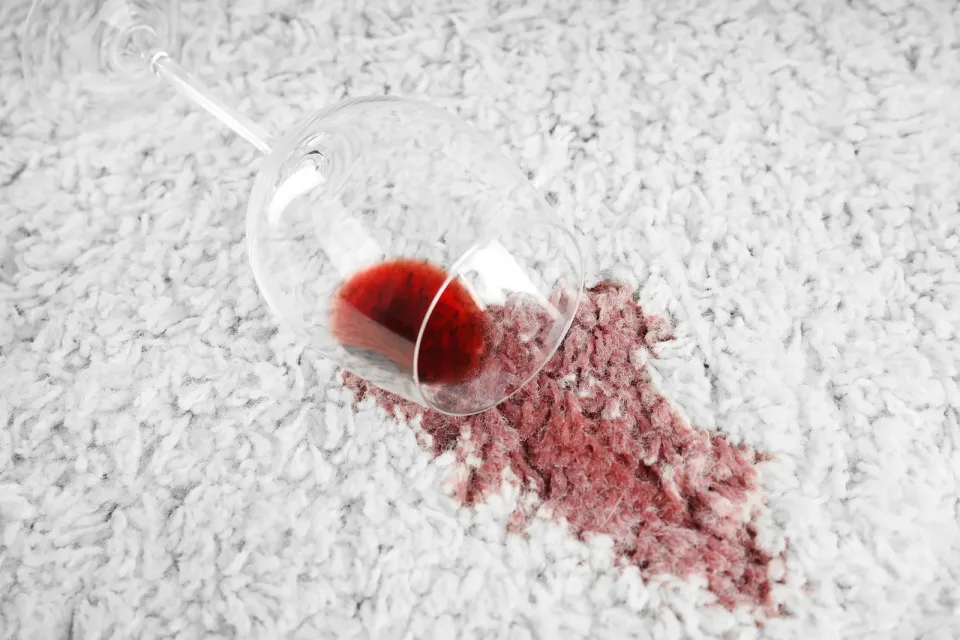
Blot right away and never rub. Then dab on a small amount of clear dish soap (like Dawn) mixed with cool water, but check your carpet fiber first. Nylon and polyester usually tolerate this. Wool, silk, viscose, and plant fibers like sisal or jute do not, and the wrong fix can leave a permanent mark. If the stain is dry, large, or on a white, cream, or natural-fiber carpet, call a professional carpet cleaner.
Since 2001, Austin Maintenance Service has cleaned carpets in Westminster, Arvada, Broomfield, Thornton, and Northglenn. Most red wine calls we get start with "I tried something first." This guide covers what works, what backfires, and how your carpet's fiber changes the answer.
First 5 Minutes: What to Do Right Now
- Blot, don't rub. Press a clean white cloth or paper towel onto the spill, working from the outside edge toward the center.
- Switch to a fresh section of cloth each time it picks up wine, until very little color transfers.
- Use cool water only. A light mist and more blotting dilute the wine. Never use hot water or heat.
- Check your fiber (Section 3) before applying any cleaner.
Use white cloths only so dye doesn't transfer from a colored towel.
| Time since spill | What's happening | Best move |
|---|---|---|
| 0 to 5 min | Wine is still liquid on the surface | Blot thoroughly, then treat if your fiber allows |
| 5 to 60 min | Pigment is starting to bond | Blot, spot-treat gently, test any cleaner first |
| Hours to overnight | Wine has soaked in and started to set | DIY odds drop fast. See dried stains |
| Days or longer | Fully set, may have reached the padding | Call a professional |
Why Red Wine Is So Hard to Remove
- Strong natural pigments act like a dye and bond to many fibers.
- Tannins help the pigment cling and can leave a brownish shadow even after the red is gone.
- Wicking: if wine soaks into the padding, it can rise back to the surface as the carpet dries. That's why a stain can vanish and return a day later. Surface cleaning can't reach that far, which is why deep wine spills usually call for professional extraction.
Red Wine on Each Carpet Fiber
Fiber decides how wine bonds and which cleaners are safe. How to check: look at the label on a spare remnant or your installation paperwork. If you can't tell, treat it as unknown, test in a hidden spot, or call us.
| Carpet fiber | How red wine behaves | Is basic dish soap + cool water safe? | Call a pro when… |
|---|---|---|---|
| Nylon (most common in homes) | Durable, but takes dye easily once factory stain protection wears down | Yes | Stain is set, or carpet is light-colored |
| Polyester | Resists water-based spills, so fresh wine often lifts well. | Yes, rinse well (it holds oily residue) | Stain is old, or a dull ring appears |
| Olefin/berber | Color runs through the fiber, so it resists wine. The main risk is wicking from over-wetting. | Yes, use very little liquid | Wine reached the padding, or loops are snagged |
| Triexta | Built to resist stains. Fresh wine usually lifts easily. | Yes | Stain persists after gentle treatment |
| Wool/wool blends | Absorbs wine and dye fast. Sensitive to peroxide and alkaline products | Small, fresh spills only | Almost always |
| Silk/viscose ("art silk") | Delicate. Water alone can cause rings, bleeding, or weakened fibers. | No | Right away |
| Sisal, jute, seagrass, cotton | Absorb liquid like a sponge. Moisture often leaves a brown tannin stain that looks worse than the wine. | No | Right away |
Wool: The fiber itself isn't the enemy; the products are. Peroxide can bleach and weaken it, and baking soda paste is alkaline, which wool doesn't tolerate. Blot, use cool water, and call a professional.
Natural plant fibers and silk-type materials: cleaning them often makes them look worse. Blot dry and leave the rest to a pro.
DIY Methods: What Works and What Doesn't
| Method | Our rating | Works best on | Main risk |
|---|---|---|---|
| Dish soap + cool water (Dawn or similar clear soap) | Safest starting point | Fresh spills on nylon, polyester, olefin, and triexta | Too much soap leaves residue that attracts dirt. |
| Dish soap + white vinegar | Safe on most synthetics | Fresh spills on synthetics | Not ideal on delicate natural fibers. Same residue risk |
| Dish soap + hydrogen peroxide | Riskiest | Fresh spills on light, colorfast synthetics, after a spot test | Permanent bleaching weakens stain protection and is unsafe on wool |
| Baking soda paste | Not for wine | Odor control (dry) | Adds moisture, leaves residue, and is alkaline (bad for wool). |
How to apply the safe method:
- Mix about 1 teaspoon of clear dish soap into 1 cup of cool water. Less soap is better because suds are hard to rinse out.
- Dab the solution on with a white cloth. Don't pour it.
- Blot until the color moves onto the cloth.
- Blot with cool water to remove the soap, then press a dry white towel on top. Add plastic wrap and a weight to pull moisture up. Skip the hair dryer, since heat can set the stain.
Safety and myths:
- Never mix hydrogen peroxide and vinegar in the same solution. Together they form a harsh acid.
- Never use chlorine bleach on carpet.
- White wine adds liquid, salt leaves residue without removing dye, and hot water sets the stain.
How to Remove Dried or Old Red Wine Stains
Dried wine has bonded to the fibers, so odds are lower. It isn't always hopeless, though, on synthetic carpet.
- Blot with a damp white cloth first to see whether any color moves.
- Apply the dish soap solution (Section 4), let it sit for a few minutes, and blot. Repeat once or twice.
- Stop if nothing moves after two gentle rounds. More effort only spreads the mark or roughs up the fibers.
- Don't stack products. Peroxide, vinegar, and store-bought sprays layered together can react and set the stain.
- Tell your cleaner what you used if you call a pro.
Don't attempt this on wool, silk, viscose, or plant fibers. If the stain is still there after two rounds, professional stain extraction is your best shot. It flushes out pigment that home methods can't reach, and the technician tests your fiber first.
White, Cream, and Light-Colored Carpet
Light carpet shows every mark, including the bleached spot a harsh DIY fix leaves behind.
- Stick to blotting, cool water, and a very small amount of dish soap.
- Skip peroxide unless you've spot-tested a hidden area and waited for the result.
- If any pink or brown shadow remains after two rounds, stop. A professional can treat it without lightening the surrounding carpet.
DIY vs. Professional Cleaning
| DIY | Professional | |
|---|---|---|
| Best for | Small, fresh spills on synthetic carpet | Set-in, large, repeated, light-colored, or delicate-fiber stains |
| Effectiveness | Fair on fresh, unpredictable on dry | Matched to the fiber and stain |
| Risk to carpet | Bleaching, residue, rings, over-wetting | Low when the technician tests first |
| Reach | Surface fibers | Extraction equipment reaches deeper to pull out moisture and residue |
| Fiber knowledge | You're guessing | Fiber is identified before treatment |
| If it goes wrong | Damage is often permanent | You learn upfront what's realistic |
When to Call a Professional
Call a carpet cleaner if any of these are true:
- The stain is dry or more than a day old.
- Your carpet is wool, silk, viscose, sisal, jute, or seagrass.
- Your carpet is white, cream, or light-colored.
- The spill was large or soaked through to the padding.
- The stain came back after cleaning (wicking).
- You already tried several products.
- You don't know your carpet's fiber.
- You're hosting soon. Thanksgiving and the holidays are close, and it's better to fix a stain properly than hope it fades.
Red Wine Stain in Your Carpet? Let Us Take a Look
Austin Maintenance Service has been cleaning carpets in Westminster since 2001, and we serve Arvada, Broomfield, Thornton, and Northglenn too.
📞 Call us at (720) 630-9983 or request an estimate.
Tell us three things, and we'll point you in the right direction:
- What kind of carpet you have (or send a photo)
- How long ago the spill happened
- What you've already tried
FAQ
Does Dawn remove red wine stains from carpet?
On fresh spills and synthetic carpet, often yes. A small amount of Dawn or a similar clear dish soap in cool water lifts wine well, but it isn't a cure-all. Use little soap and rinse thoroughly, because leftover soap attracts dirt and leaves a ring. On wool or natural fibers, call a pro instead.
What removes dried red wine stains?
On synthetic carpet, a damp white cloth followed by a mild dish soap solution is the safest first try. If the color doesn't move after two gentle rounds, stop. Set-in wine usually needs professional spotting and extraction.
How do you get old red wine stains out of carpet?
Old stains have bonded to the fibers and may have reached the padding. Try the gentle steps in the dried stain section on synthetics only. If the stain remains or returns, a professional has the best chance of removing it fully.
What is the most effective carpet stain remover for red wine?
There's no single best product, because the right one depends on your fiber and how old the stain is. For fresh spills on synthetics, dish soap and cool water is the safest and most effective home options. If you buy a spot remover, choose one labeled safe for your carpet type and for red wine or tannin stains, and test a hidden area first. Avoid chlorine bleach. For dried stains, professional treatment is more reliable.
Is baking soda good for red wine on carpet?
Not really. A wet paste adds moisture and leaves residue without lifting the dye, and it's alkaline, which is harmful to wool.
Does hydrogen peroxide ruin carpet?
It can. Peroxide bleaches many carpet dyes and is unsafe on wool. Spot-test first, or let a professional handle it.
How much does professional red wine stain removal cost?
It depends on the size and age of the stain and your carpet's fiber. Call (720) 630-9983 or request an estimate.